01 / Targeted adsorption or scavenging of selected degradation products
This mechanism is evaluated together with the operating envelope, contamination load, compatibility and required treatment outcome.
FILTRATION TECHNOLOGY
Oil Condition Remediation
Targeted remediation for selected oil-degradation products and chemistry-related contaminants that conventional particulate filtration alone does not resolve.
Use fluid analysis to identify the degradation mechanism, then apply a compatible offline treatment such as validated adsorption, ion-exchange or other remediation media and verify the oil condition before and after treatment.
DESCRIPTION
Use fluid analysis to identify the degradation mechanism, then apply a compatible offline treatment such as validated adsorption, ion-exchange or other remediation media and verify the oil condition before and after treatment.
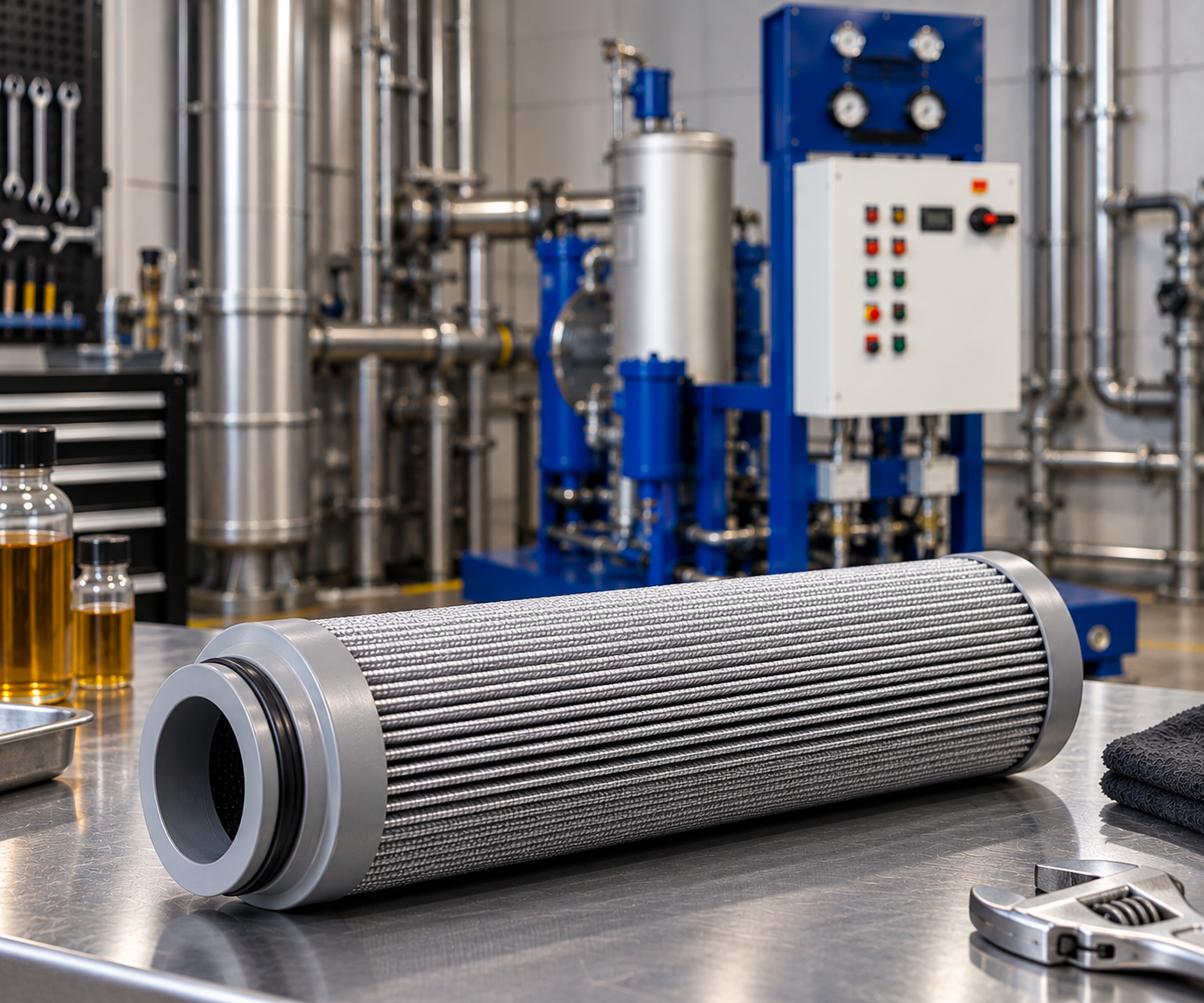
This mechanism is evaluated together with the operating envelope, contamination load, compatibility and required treatment outcome.
This mechanism is evaluated together with the operating envelope, contamination load, compatibility and required treatment outcome.
This mechanism is evaluated together with the operating envelope, contamination load, compatibility and required treatment outcome.
This mechanism is evaluated together with the operating envelope, contamination load, compatibility and required treatment outcome.
This mechanism is evaluated together with the operating envelope, contamination load, compatibility and required treatment outcome.
OPERATING REALITY
The filter, element, media, vessel or treatment device is only one part of the result. Flow, contaminant loading, pressure, temperature, chemistry, housing condition, drainage, sealing and upstream/downstream process behavior can materially change performance.
OILREVEX™ identifies a treatment function. It does not make every product or system inside that category technically interchangeable.
Efficiency, capacity, pressure drop, outlet quality, service interval and compatibility remain tied to validated product or project evidence.
ELIMFILTERS PRODUCT SCOPE
For this Industrial & Process family, the ELIMFILTERS commercial focus is the validated filtration, separation or treatment medium and replaceable element appropriate to the application. Existing housings, vessels, collectors, skids, pumps, fans, ductwork, controls and other plant equipment define interfaces and operating conditions; they are not presented as ELIMFILTERS-manufactured equipment unless separately approved.
APPLICATION ENVIRONMENT
SPECIFICATION & SELECTION
Known project conditions? Send the operating data. Uncertain process or treatment path? Use the engineering review.
HOW THE SYSTEM BEHAVES
Use fluid analysis to identify the degradation mechanism, then apply a compatible offline treatment such as validated adsorption, ion-exchange or other remediation media and verify the oil condition before and after treatment.
Final design depends on the project operating window and the validated configuration selected for the application.
Final design depends on the project operating window and the validated configuration selected for the application.
Final design depends on the project operating window and the validated configuration selected for the application.
Final design depends on the project operating window and the validated configuration selected for the application.
Final design depends on the project operating window and the validated configuration selected for the application.
The objective is controlled contamination or conditioning performance at the required process boundary—not simply installation of a familiar filter form.
ENGINEERING GUIDANCE
OILREVEX™ is not selected simply because oil appears dark or equipment has deposits. Fluid analysis must distinguish oxidation products, varnish potential, acidic species, sludge, additive changes and other possible causes before a remediation medium is chosen.
Some oil-degradation products remain dissolved or semi-soluble until conditions cause them to deposit. Conventional particulate filtration can support cleanup but may not resolve the chemistry responsible for varnish or other deposits.
Adsorption and ion-exchange media can interact differently with base stocks, additives and degradation products. Treatment must be validated so the target contaminant is addressed without creating an unacceptable change in the fluid.
Rapid return of varnish potential or degradation indicators after treatment can point to continuing oxidation, thermal stress, electrostatic discharge, contamination or another unresolved generation mechanism.
Successful remediation is verified with appropriate fluid-condition data and operating evidence. Visual appearance alone is not a sufficient basis for declaring the oil restored.
SERVICE & DIAGNOSIS
Repeated breakthrough, pressure-drop problems, unstable outlet quality or short service intervals justify reviewing the whole process boundary.
REQUEST PROCESS REVIEWQUESTIONS FROM THE FIELD
OILREVEX™ is the ELIMFILTERS Industrial & Process technology for oil condition remediation. Its role is to use fluid analysis to identify the degradation mechanism, then apply a compatible offline treatment such as validated adsorption, ion-exchange or other remediation media and verify the oil condition before and after treatment.
OILREVEX™ belongs to FLUREXIS™ — Fluid Conditioning Technologies. The platform defines the commercial treatment universe while the family identifies the specific mechanism or treatment function.
No. Industrial & Process selection starts with the operating problem, process conditions, contaminant, flow, pressure, temperature, compatibility requirements and required outcome. Product configuration follows the validated application.
No universal performance value is assigned across the family. Numeric efficiency, capacity, pressure-drop, service-life or outlet-quality claims must remain tied to validated product or project evidence.
No. ELIMFILTERS Industrial & Process is centered on the validated filtration, separation or treatment media and replacement element. Housings, vessels, collectors, skids, pumps, fans, ductwork, controls and other process equipment are application context unless a separate ELIMFILTERS system scope is explicitly approved.
OILREVEX™ addresses selected degradation products and chemistry-related contamination confirmed by fluid analysis, particularly conditions that are not resolved by conventional particulate filtration alone.
No. It is a remediation family selected from the diagnosed oil condition. Depending on the fluid and contaminant, the treatment can involve adsorption, ion exchange or another validated offline medium in addition to particulate control.
Different symptoms can originate from oxidation, water, particles, additive changes, acidity or deposit-forming degradation products. The treatment mechanism should match the confirmed cause rather than the visual symptom.
If oxidation, thermal stress, electrostatic effects, contamination or another degradation source remains active, the target contaminant can regenerate after treatment. Root-cause correction is therefore part of the remediation plan.
No. OILREVEX™ centers on the validated remediation media and replacement element function. Pumps, coolers, housings, skids and controls may define the operating context but are not represented as ELIMFILTERS-manufactured equipment unless separately approved.
STANDARDS & TEST GOVERNANCE
The standards below are resolved from the governed ELIMFILTERS Knowledge Center for this treatment family. Applicability remains product-, fluid-, contaminant- and duty-specific.
A listed standard identifies a relevant engineering or verification method. It does not mean every OILREVEX™ element is certified, qualified or tested to every listed method. Product claims require the corresponding validated test evidence.
TECHNICAL BASIS
TC-OIL-02 remains the mechanism-level engineering identifier behind the customer-facing family.
No universal efficiency, capacity, micron rating, separation percentage, service-life multiplier or outlet-quality value is assigned across OILREVEX™ without validated evidence for the specific product or project.
Approved engineering relationships, operating conditions and diagnostic guidance for OILREVEX™ are maintained in the governed ELIMFILTERS Knowledge Center.
WHEN A TECHNICAL REVIEW MAKES SENSE
Repeated failures, unstable process quality, short service intervals, unexpected pressure drop, contamination breakthrough or uncertain compatibility justify reviewing the complete operating environment and treatment architecture.
PLATFORM INTEGRATION
Industrial hydraulic- and lubrication-fluid conditioning for solid contamination, water and selected oil-degradation products.
EXPLORE PLATFORMOILREVEX™ is resolved inside the FLUREXIS™ platform. Final selection connects the treatment mechanism to operating conditions, contamination load, compatibility, required outcome and validated product evidence.
APPLICATION SUPPORT
Industrial & Process projects are qualified by duty, operating envelope, contamination mechanism, process risk and system compatibility before the physical solution is selected.