01 / Surface or depth filtration selected by particle behavior
This mechanism is evaluated together with the operating envelope, contamination load, compatibility and required treatment outcome.
FILTRATION TECHNOLOGY
Fine Dust & Fume Filtration
Process-generated fine dust and fume filtration for industrial extraction and dust-collection systems, with media and element selection resolved around the actual particulate behavior and duty.
Capture process-generated fine particulate and fume within the installed extraction or dust-collection system before recirculation, discharge or downstream treatment, while preserving the required airflow, sealing and service behavior of the validated collector interface.
DESCRIPTION
Capture process-generated fine particulate and fume within the installed extraction or dust-collection system before recirculation, discharge or downstream treatment, while preserving the required airflow, sealing and service behavior of the validated collector interface.
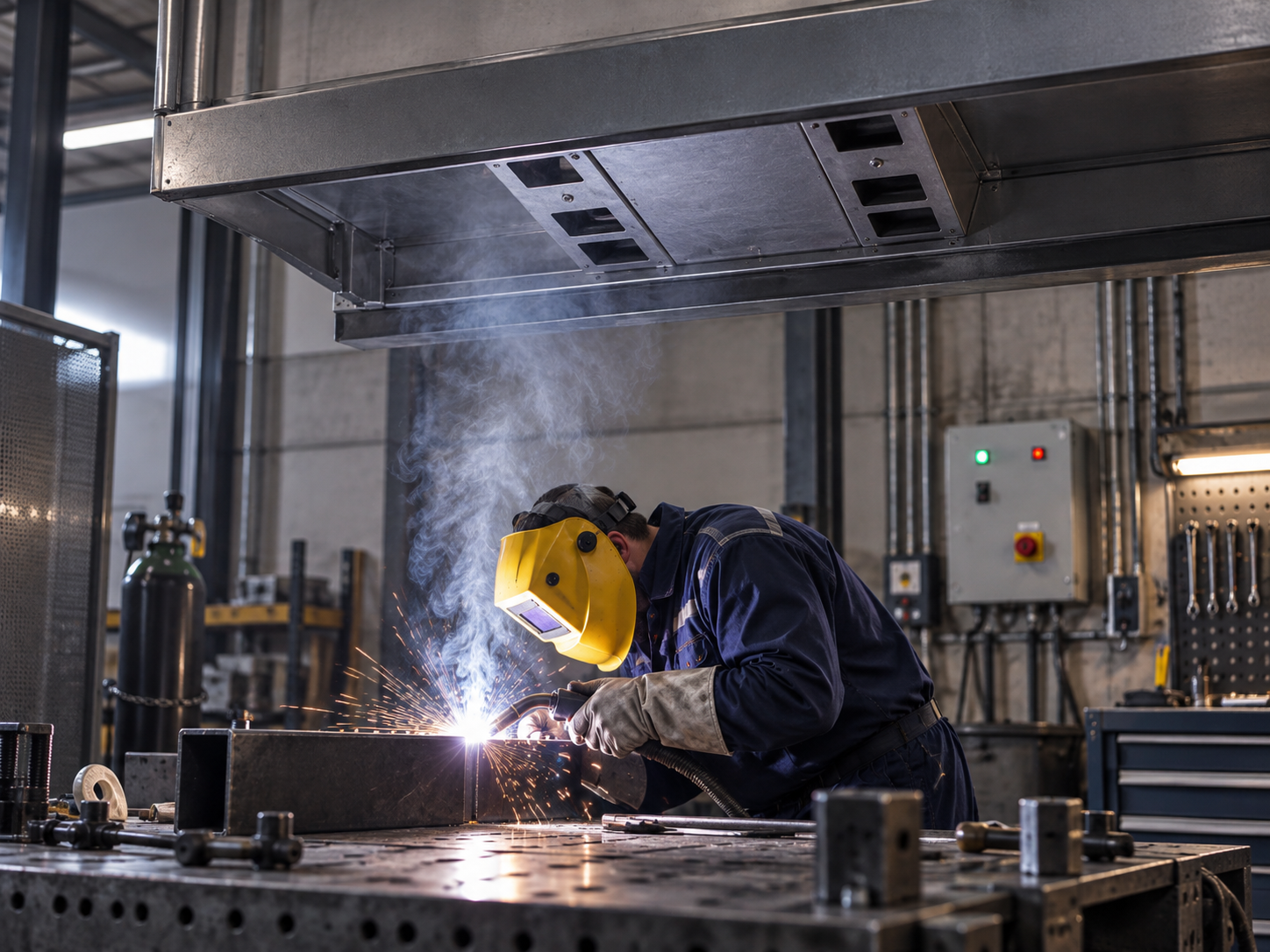
This mechanism is evaluated together with the operating envelope, contamination load, compatibility and required treatment outcome.
This mechanism is evaluated together with the operating envelope, contamination load, compatibility and required treatment outcome.
This mechanism is evaluated together with the operating envelope, contamination load, compatibility and required treatment outcome.
This mechanism is evaluated together with the operating envelope, contamination load, compatibility and required treatment outcome.
This mechanism is evaluated together with the operating envelope, contamination load, compatibility and required treatment outcome.
OPERATING REALITY
The filter, element, media, vessel or treatment device is only one part of the result. Flow, contaminant loading, pressure, temperature, chemistry, housing condition, drainage, sealing and upstream/downstream process behavior can materially change performance.
FUMEVRA™ identifies a treatment function. It does not make every product or system inside that category technically interchangeable.
Efficiency, capacity, pressure drop, outlet quality, service interval and compatibility remain tied to validated product or project evidence.
APPLICATION ENVIRONMENT
SPECIFICATION & SELECTION
Known project conditions? Send the operating data. Uncertain process or treatment path? Use the engineering review.
HOW THE SYSTEM BEHAVES
Capture process-generated fine particulate and fume within the installed extraction or dust-collection system before recirculation, discharge or downstream treatment, while preserving the required airflow, sealing and service behavior of the validated collector interface.
Final design depends on the project operating window and the validated configuration selected for the application.
Final design depends on the project operating window and the validated configuration selected for the application.
Final design depends on the project operating window and the validated configuration selected for the application.
Final design depends on the project operating window and the validated configuration selected for the application.
Final design depends on the project operating window and the validated configuration selected for the application.
The objective is controlled contamination or conditioning performance at the required process boundary—not simply installation of a familiar filter form.
ENGINEERING GUIDANCE
FUMEVRA™ is resolved around particulate created by the production process. Fine dust and fume can behave differently from ordinary ambient dust, so media selection starts with the actual contaminant and duty rather than a generic filter class.
Fine, sticky, hygroscopic, abrasive, hot, fibrous or oil-bearing particulate can alter loading, cake release, pressure-drop development and element life. These conditions are part of the selection basis.
Where a cartridge and collector are validated for pulse-jet cleaning, a brief reverse compressed-air pulse flexes the filter media and dislodges accumulated dust from the outer surface so it can fall toward the hopper. The dust is not injected into the filter, and this cleaning behavior must not be assumed for every FUMEVRA™ configuration.
A cleanable element is not automatically appropriate for every dust or fume. Media construction, loading mechanism, collector interface, pulse conditions where applicable, and the validated cleaning method have to work together before regeneration is relied upon.
The filter element can only treat particulate that reaches the collector. Source capture, duct transport, airflow balance and collector condition remain system variables outside the element itself and can limit overall control performance.
FUMEVRA™ identifies the ELIMFILTERS filtration family used within an installed dust-collection or extraction system. The collector housing, fan, ductwork, hopper and cleaning hardware remain application equipment unless separately specified.
Differential-pressure trend, cleaning recovery, visible downstream particulate, element condition and seating evidence are reviewed together. No single pressure-drop reading establishes media condition or remaining service life by itself.
SERVICE & DIAGNOSIS
Repeated breakthrough, pressure-drop problems, unstable outlet quality or short service intervals justify reviewing the whole process boundary.
REQUEST PROCESS REVIEWQUESTIONS FROM THE FIELD
FUMEVRA™ is the ELIMFILTERS Industrial & Process technology for fine dust & fume filtration. Its role is to capture process-generated fine particulate and fume within the installed extraction or dust-collection system before recirculation, discharge or downstream treatment, while preserving the required airflow, sealing and service behavior of the validated collector interface.
FUMEVRA™ belongs to PARTION™ — Dust & Fume Technologies. The platform defines the commercial treatment universe while the family identifies the specific mechanism or treatment function.
No. Industrial & Process selection starts with the operating problem, process conditions, contaminant, flow, pressure, temperature, compatibility requirements and required outcome. Product configuration follows the validated application.
No universal performance value is assigned across the family. Numeric efficiency, capacity, pressure-drop, service-life or outlet-quality claims must remain tied to validated product or project evidence.
FUMEVRA™ is the PARTION™ filtration family for process-generated fine dust and fume particulate handled by industrial extraction, dust-collection and production-exhaust systems.
AEREMIS™ General Air Filtration addresses general ventilation and make-up-air particulate. FUMEVRA™ is resolved around particulate generated by an industrial process, where loading behavior, cleaning strategy and process conditions can be substantially different.
A short reverse compressed-air pulse enters the clean side of a cartridge that is designed for this duty, briefly flexing the filter media. Accumulated dust cake releases from the outer media surface and falls toward the hopper. The pulse cleans the filter surface; it does not inject dust into the collector.
No. Cleanability depends on the validated media, element construction, contaminant behavior and installed collector or cleaning interface. Replaceable and cleanable treatment paths must remain application-specific.
No. FUMEVRA™ identifies the filtration technology and filter-element family. The installed collector housing, fan, ductwork, hopper and cleaning hardware are system context unless separately specified.
No. Differential-pressure trend is one diagnostic input. Cleaning recovery, downstream particulate, element condition, sealing, process changes and the validated service criteria must also be considered.
Identify the generating process, source-capture position, particle characteristics and concentration, airflow and duty cycle, temperature and moisture conditions, difficult particulate behavior, required downstream condition, installed housing or collector interface, cleaning method where applicable, and any process-safety constraints.
TECHNICAL BASIS
TC-DUST-01 remains the mechanism-level engineering identifier behind the customer-facing family.
No universal efficiency, capacity, micron rating, separation percentage, service-life multiplier or outlet-quality value is assigned across FUMEVRA™ without validated evidence for the specific product or project.
Approved engineering relationships, operating conditions and diagnostic guidance for FUMEVRA™ are maintained in the governed ELIMFILTERS Knowledge Center.
WHEN A TECHNICAL REVIEW MAKES SENSE
Repeated failures, unstable process quality, short service intervals, unexpected pressure drop, contamination breakthrough or uncertain compatibility justify reviewing the complete operating environment and treatment architecture.
PLATFORM INTEGRATION
Industrial dust and fume filtration for process-generated particulate, extraction systems and demanding production environments.
EXPLORE PLATFORMFUMEVRA™ is resolved inside the PARTION™ platform. Final selection connects the treatment mechanism to operating conditions, contamination load, compatibility, required outcome and validated product evidence.
APPLICATION SUPPORT
Industrial & Process projects are qualified by duty, operating envelope, contamination mechanism, process risk and system compatibility before the physical solution is selected.
EXPLORE RELATED TECHNOLOGIES
Review the platform context and engineering qualification path.