Continuous Duty
Production equipment may operate across long shifts where a filtration-related interruption can affect more than one machine or workstation.
DIRECT ANSWER
Start with the machine or plant utility, identify the contamination source and protected system, then resolve component sensitivity, duty cycle, shutdown access and application evidence. Manufacturing filtration should support the production process around the asset, not be selected from equipment category or service interval alone.
THE PRODUCTION SYSTEM
Manufacturing plants connect machines, utilities and support systems into one operating sequence. The filtration decision should consider what happens to production when one hydraulic unit, compressor, pump or engine-driven utility is unavailable.
Production equipment may operate across long shifts where a filtration-related interruption can affect more than one machine or workstation.
Servo valves, pumps, actuators and precision hydraulic interfaces depend on controlled fluid cleanliness to support repeatable machine response.
Dust and airborne particulate can enter intake paths, housings and service interfaces across compressors, engines and production support equipment.
Plants often depend on planned shutdowns and scheduled service windows, so part identification and maintenance preparation must be resolved before the line is stopped.
PLANT ASSETS
Hydraulic power, compressed-air support, pumping and machine operations can share the same facility while requiring different protection decisions and service evidence.
CONTAMINATION PATHWAYS
Selection should move from contamination source to protected system, then to the appropriate ELIMFILTERS technology and finally to a validated part.
Ingress + internal wear + service contamination
Plant dust + intake loading + service ingress
Wear debris + oxidation byproducts + service ingress
Storage + transfer + condensation in engine-driven plant utilities
The correct filter protects a production interface, not just a machine. Asset criticality, contamination pathway, component sensitivity, maintenance timing and application evidence must be resolved before the part number is accepted.
In a production environment, a single failed filter can stop an entire line. ELIMFILTERS® systems protect the compressors, hydraulic power units, and rotating machinery that keep manufacturing facilities running through continuous duty cycles and process contamination. Our distributor partners help plants keep the correct protection system in inventory, so a scheduled service interval never turns into an unscheduled shutdown.
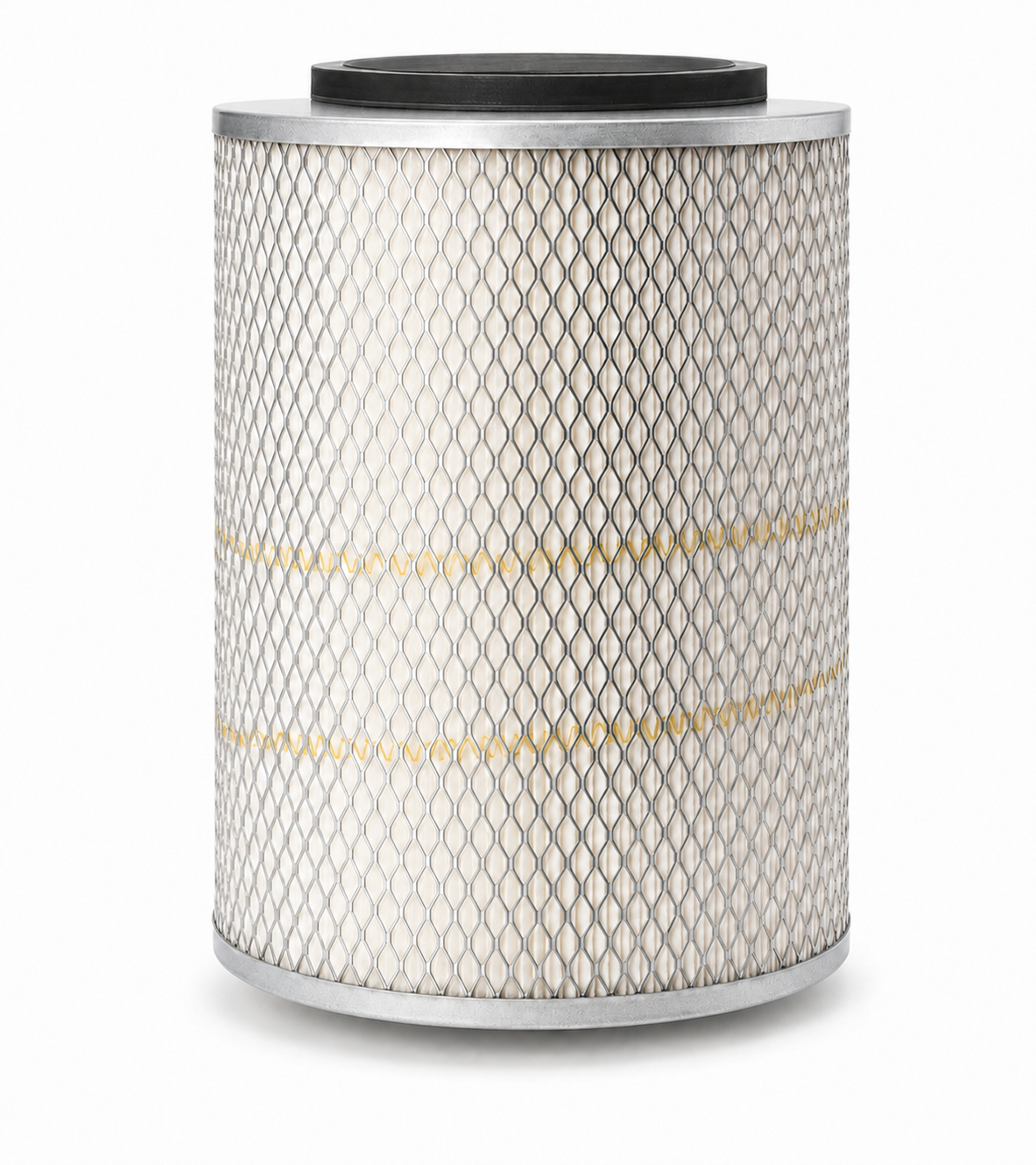
Primary air elements are the main contamination barrier protecting the combustion chamber from particulate ingestion. MACROCORE™ progressive-density media distributes contaminant loading through the full media depth while balancing efficiency, capacity, and restriction.
View Primary Air →PRODUCTION CONTINUITY
Filtration supports the machine and the production sequence around it. The greater the dependency on a shared hydraulic unit, compressor, pump or engine-driven utility, the more important correct contamination control and service preparation become.
A filtration problem can constrain the machine, utility or support system that a larger production sequence depends on.
Hydraulic and lubricated interfaces depend on controlled contamination levels to support consistent motion and repeatable response.
Compressors, pumps and engine-driven support equipment can become production bottlenecks when service or contamination interrupts their availability.
Correct application evidence before shutdown reduces the risk of discovering a mismatch after the maintenance window has already started.
Filtration helps protect higher-value pumps, valves, bearings, actuators and engine interfaces from avoidable contamination exposure.
A disciplined contamination-control path supports more predictable service planning around production schedules and maintenance windows.
FROM PLANT CONDITION TO PART
Identify the machine, hydraulic power unit, compressor, pump or engine-driven plant utility.
Establish what production step or shared utility depends on the asset.
Define particulate, fluid contamination, storage, service ingress and operating environment.
Match the contamination mechanism to hydraulic, air intake, lubrication or fuel protection.
Validate the final filter using OEM reference, dimensions and documented equipment evidence before the maintenance window.
MAINTENANCE EVIDENCE
Manufacturing maintenance often works inside defined windows. Final identification should reconcile the known reference, machine context, dimensions, protected system and operating conditions before the asset is taken out of service.
MANUFACTURING FILTRATION QUESTIONS
Hydraulic, air intake, lubrication and fuel or water-separation systems are common priorities across hydraulic power units, compressors, process pumps, machine tools and engine-driven plant utilities. The correct priority depends on the machine, protected system, contamination source, duty cycle and maintenance access.
Hydraulic power units and machine systems rely on pumps, valves, actuators and precision control interfaces. Contamination can interfere with those surfaces, so filtration should be matched to component sensitivity, pressure, flow, duty and application requirements.
Filtration protects machines and utilities that may sit upstream of multiple production steps. The objective is not to claim that a filter alone prevents downtime, but to control contamination around assets whose loss of availability can disrupt planned production.
No. A fixed interval does not describe contamination loading, hydraulic sensitivity, fluid condition, machine duty, environment or shutdown access. Service planning should reflect the actual equipment and operating conditions.
Use the machine or asset, protected system, fluid or air path, operating conditions, duty cycle, known OEM or existing filter reference, dimensions when available and validated application evidence.
A scheduled maintenance window is more effective when the correct part has already been validated. Equipment context, dimensions, protected system and known references should be reconciled before the machine is taken out of service.
Yes. If an OEM reference or current filter number is known, Part Search provides the fastest route to cross-reference and application information. For an engineering review, include the machine, protected system and operating conditions.
HAVE A MACHINE OR PLANT-UTILITY APPLICATION?
Send the machine or utility, protected system, operating conditions, duty profile and any known OEM or filter reference.
IDENTIFY MY PLANT PROTECTION PATH